Eye Care Navigation Service (ECNS)
26 May 2026
The service acts as a single point of access for ophthalmology supports systems by providing clinical triage that ensures patients are seen in the right place, by the right person and at the right timescale.
Cross-sector partnerships
Community
Commissioning
Integration
The Eye Care Navigation Service (ECNS) by Primary Eyecare Services acts as a single point of access for ophthalmology supports systems by providing clinical triage that ensures patients are seen in the right service, by the right person and in the right timescale. By delivering consistent triage, improving referral quality and directing patients to the most appropriate setting first time, the service reduces pressure on Hospital Eye Services and strengthens system-wide pathway flow.
Since launch, the service has expanded at pace, growing monthly referral volumes from 2,000 to 21,000 and supporting the processing of more than 200,000 referrals across areas covering a population of 12.5 million. Delivered at scale and embedded within local systems, the model continues to extend across England, with clear benefits for patients, clinicians and commissioners.
Background
Ophthalmology is one of the most pressured specialties in the NHS. Rising demand, long waiting lists and constrained hospital capacity continue to increase the risk of avoidable sight loss and poor patient experience. For commissioners, the challenge is not simply increasing capacity but ensuring that patients are directed to the most appropriate eye care setting first time, using existing community resources more effectively.
The Eye Care Navigation Service provides a system-wide solution to this challenge. By managing all ophthalmology referrals through an effective single point of access – the model improves referral quality, ensure effective patient choice, supports active demand management and enables a safe and sustainable shift of eye care services from hospital to neighbourhood settings.
Primary Eyecare Services, working in partnership with Integrated Care Boards (ICBs), Hospital Eye Services and Local Optical Committees (LOCs), is now the largest provider of single point of access for ophthalmology nationally. As adoption has accelerated, the model continues to demonstrate the clear and measurable benefits for patients, providers and commissioners.
The Case for System-Wide Referral Control
Commissioners have observed an increase in ophthalmology referrals entering secondary care, which has contributed to longer waiting lists and greater demand on Hospital Eye Services (HES). While many referrals are clinically appropriate, some could be safely managed within community optometry services. Additionally, some referrals do not always contain the information required for hospital teams to act efficiently.
Hospital-based triage processes can find it challenging to deliver timely and consistent demand management across the healthcare system. Differences in referral routes and referral quality may lead to inefficiencies and occasional delays for patients requiring urgent care. Meanwhile, commissioned community eye care services have capacity to support patient care but are sometimes under-utilised.
Varied pathways can impact patient choice and equitable access to services. To address these challenges, commissioners are seeking clinically robust, system-wide approaches that consistently manage ophthalmology referrals, enhance pathway flow and patient choice, whilst protecting secondary care capacity for those with the greatest clinical need.
Actions
The Eye Care Navigation Service was established as a single front door for all ophthalmology referrals from optometrists, GPs and NHS111. Referrals are submitted digitally and supported by Robotic Automation Processes (RAP), which help to identify those referrals that require administrative triage only, enabling rapid onward routing and patient choice, and those that require both administrative and clinical triage prior to patient choice. All referrals are routed to a central hub, where they receive both administrative and clinical triage within 24 hours.
The service is delivered by experienced optometrists, supported by our consultant ophthalmologists and optometrist clinical leads. Each referral is reviewed to determine the most appropriate next step. Referrals may be returned to the referrer for further information or advice, redirected into a commissioned community eye care service or sent to hospital eye services on the correct pathway with the appropriate urgency.
This approach ensures patients are seen by the right professional, in the right setting, at the right time, while avoiding unnecessary hospital appointments. Patient choice is actively supported through online tools, including a “find a hospital” function, alongside a dedicated telephone line and comprehensive patient information resources.
The Eye Care Navigation Service offers commissioners a reliable and clinical system for referral management. Additionally, it supplies comprehensive, high-quality data to inform pathway reviews, service improvements and commissioning decisions.
Outcomes
2025/2026 Outcomes
System efficiency:
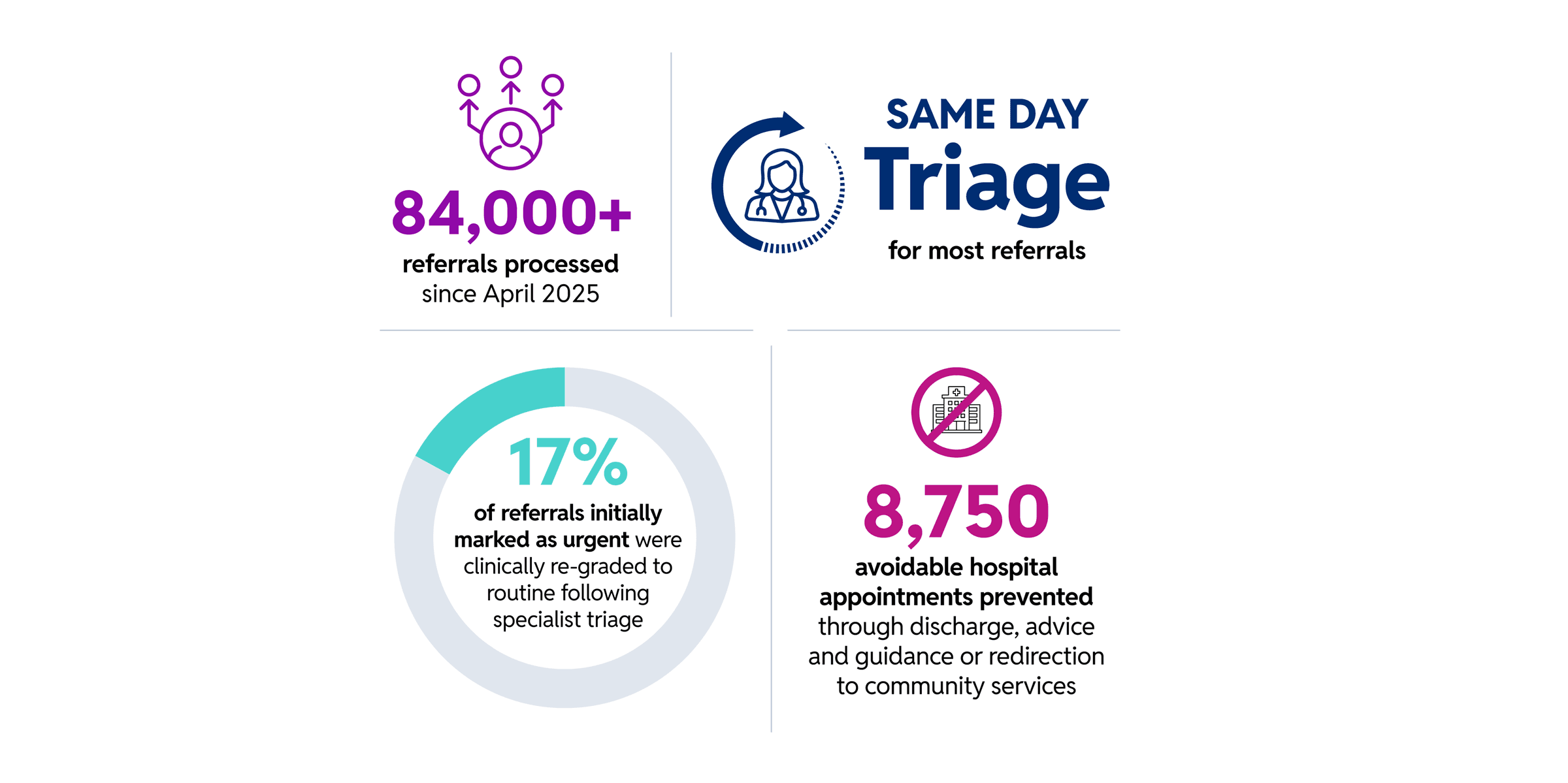
- 84,000+ referrals processed since April 2025.
- Same-day triage for most referrals.
- 8,750 avoidable hospital appointments prevented through discharge, advice and guidance or redirection to community services.
- 17% of referrals initially marked as urgent were clinically re-graded to routine following specialist triage.
Patient experience and choice:
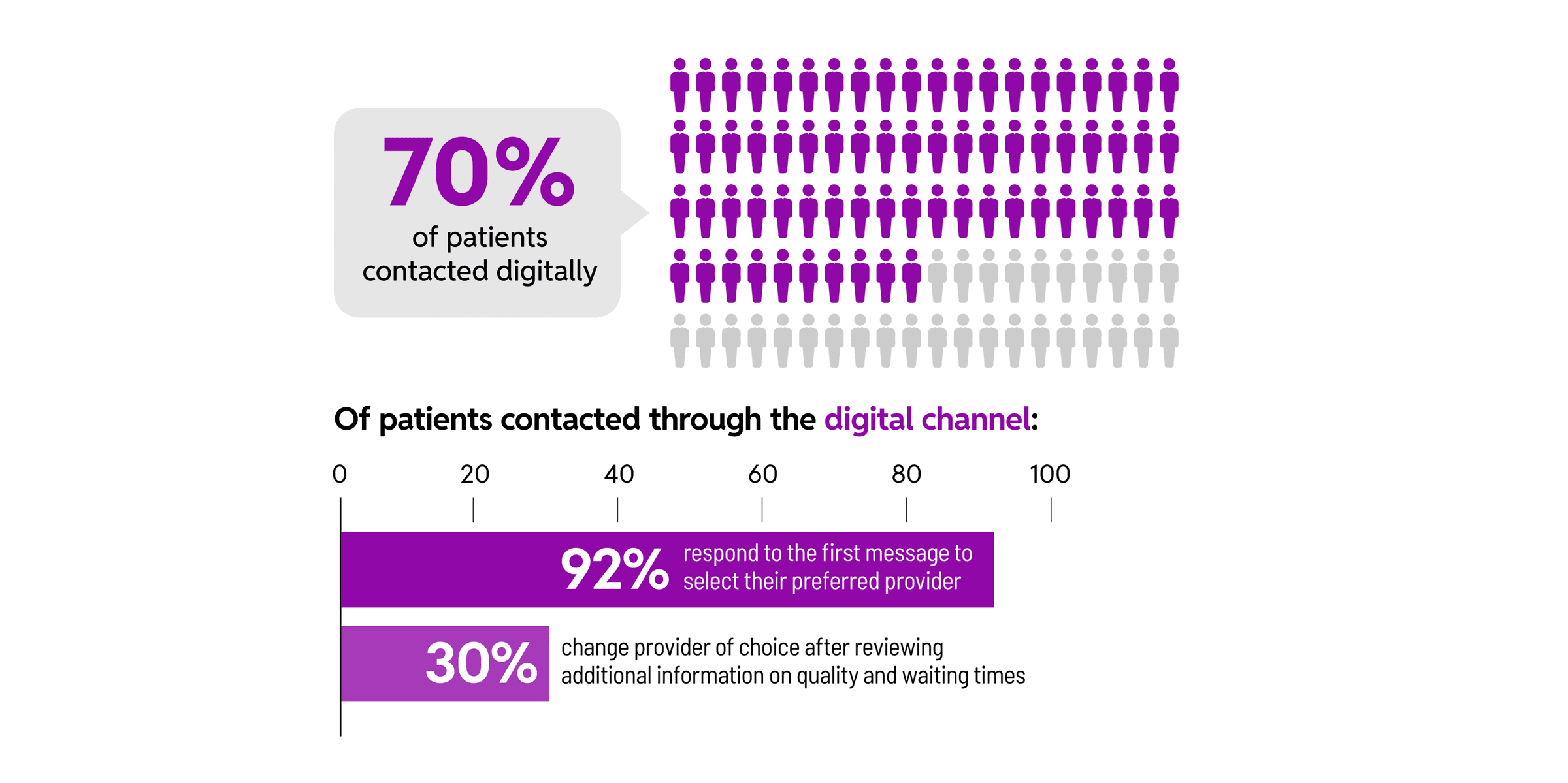
- 70% of patients contacted digitally; remaining patients receive letters or calls within target timescales.
- Of patients contacted through digital channels, 92% responded to the first message to select their preferred provider, while 30% changed provider of choice after reviewing additional information on quality and waiting times.
- Multi-channel communication now includes digital messaging, telephone support, letters and online provider information tools.
Workforce and referral quality:
- 300+ clinicians reached through Continuing professional development on referral quality.
- Practice Dashboards provide a visual overview of referral activity, allowing practice-level data to be compared with national figures and enabling a full view of outcomes.
Pathway development:
- The Eye Care Navigation Service identifies activity suitable for new pathways, supporting accurate financial and capacity planning.
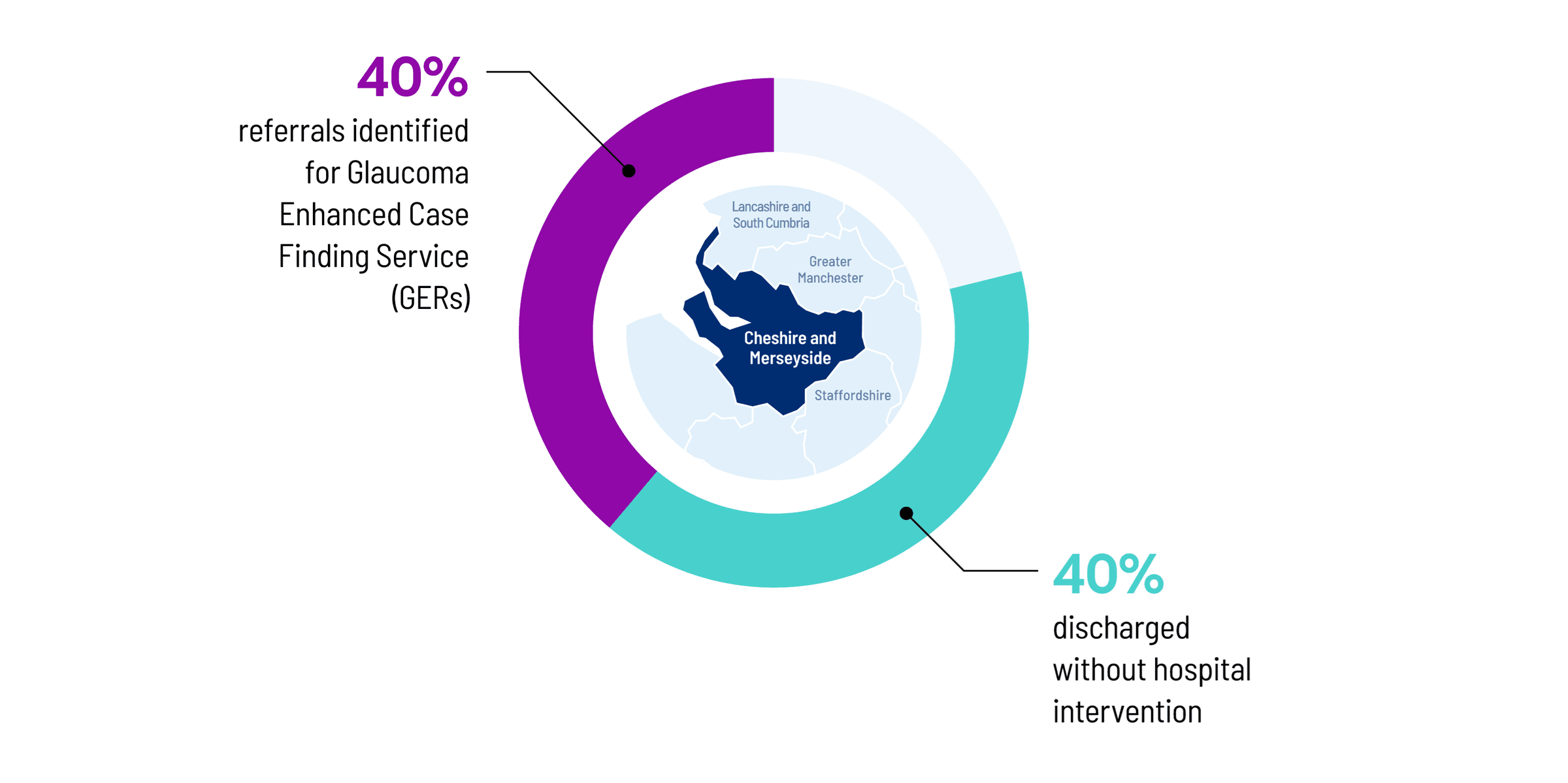
- In Cheshire & Merseyside, 40% of glaucoma referrals identified for
Glaucoma Enhanced Case Finding Service (GERs) with 40% discharged without hospital intervention.
Greater Manchester
Through collaboration with the local Clinical Reference Group (CRG), ICB commissioners, NHS trusts, and Local Optical Committees, our Eye Care Navigation Service was launched across all 10 localities in August 2025, serving a population of 3 million patients.
Impact to date:
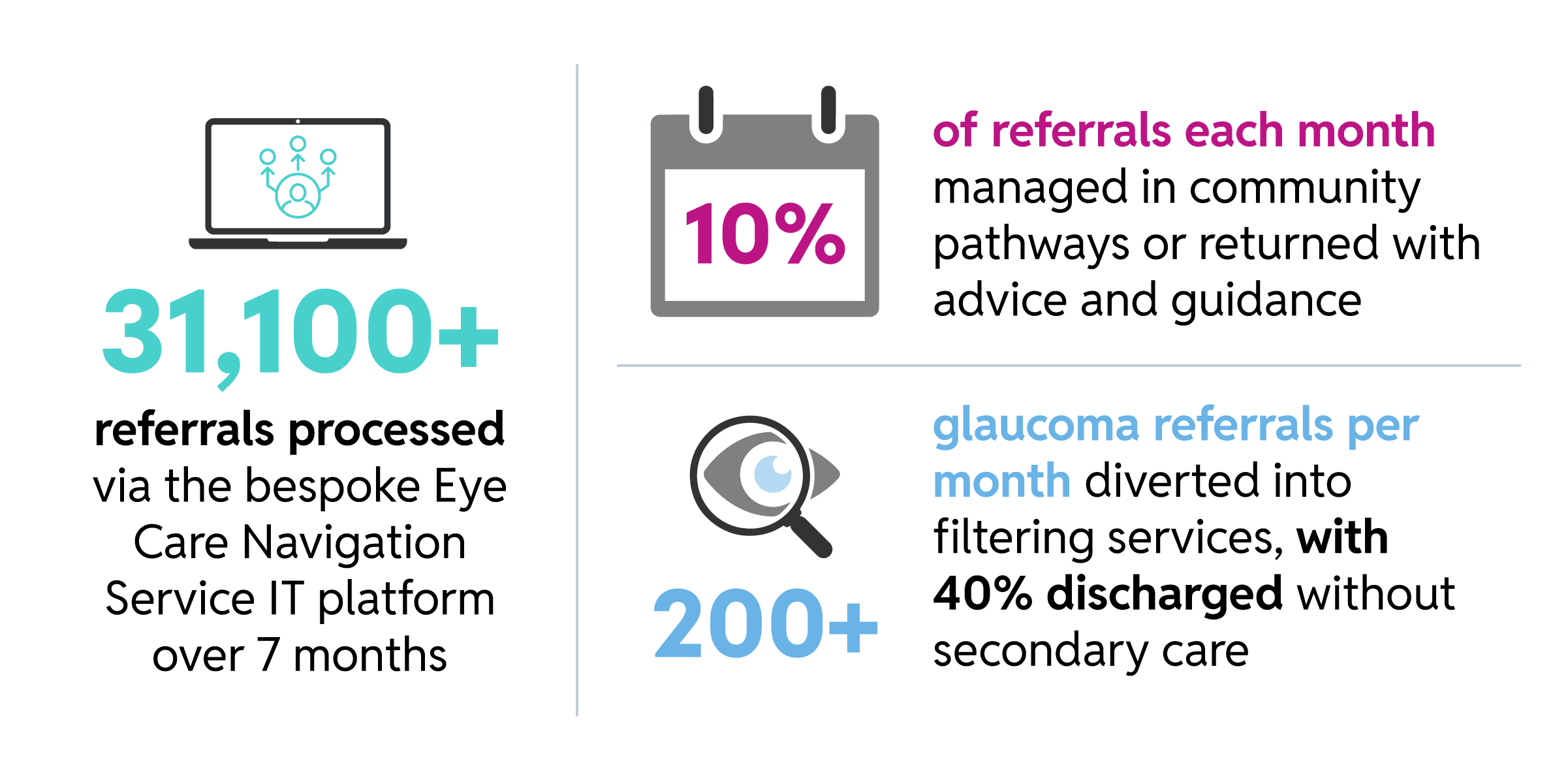
- 31,100 referrals processed via the bespoke Eye Care Navigation Service IT platform over 7 months.
- 10% of referrals each month managed in community pathways or returned with advice and guidance.
- 200+ glaucoma referrals per month diverted into filtering services, with 40% discharged without secondary care.
Service-level data is enabling the local ophthalmology clinical reference group to plan for population need, identify pathway gaps and scale best practice. Collaboration with the Optometry Excellence Programme is supporting increased digital referral adoption and the identification of workforce training needs in community optometry.
Patient impact
There are several examples of how the Eye Care Navigation Service enhances patient experience, supports clinicians and removes barriers to care.
Preventing loss of independence:
For elderly people living alone, independence means dignity and a sense of belonging. When eyesight problems threatened a patient's ability to remain at home, the Eye Care Navigation Service quickly prioritised their care, by re-triaging and placing the patient on the cancellation list, ensuring a faster appointment. This prompt action eased anxiety for both the patient and their family, avoiding unnecessary hospital admission, duplication and long delays, allowing them to continue living safely and confidently at home.
Supporting urgent legal deadlines:
For a patient needing a medical report within a week for court, timely paperwork can be a lifeline. The Eye Care Navigation Service swiftly arranged for a local optometry assessment and medical report, meeting the court deadline. Without the Eye Care Navigation Service, a hospital appointment in time would have been unlikely. This urgent and compassionate action eased the patient’s burden and brought much needed reassurance to their family.
Emergency care for bed-bound patients:
For a bedbound patient, securing urgent care can seem impossible, heightening worries for them and their carers. When a routine referral risked a dangerous delay, the Eye Care Navigation Service stepped in, escalating to the Emergency Eye Department, ensuring rapid treatment. This action not only broke down barriers to treatment but also brought comfort and reassurance to the patient and their family.
Further information
For more detail on this case study, contact Primary Eyecare Services.